Pages

Pages

Monday, 26 September 2011

Treasure hunters eye huge shipwreck haul


When the SS Gairsoppa was torpedoed by a German U-boat, it took its huge silver cargo to a watery grave. Seventy years later, US divers said they are working to recover what may well be the biggest shipwreck haul ever. Florida-based Odyssey Marine Exploration on Monday confirmed the identity and location of the Gairsoppa and cited official documents indicating the ship was carrying some 219 tons of silver coins and bullion when it sank in 1941 in the North Atlantic some 490km off the Irish coast. That's worth about $200m today, which would make it history's largest recovery of precious metals lost at sea, Odyssey said. "We've accomplished the first phase of this project -- the location and identification of the target shipwreck - and now we're hard at work planning for the recovery phase," Odyssey senior project manager Andrew Craig said in a statement. "Given the orientation and condition of the shipwreck, we are extremely confident that our planned salvage operation will be well suited for the recovery of this silver cargo." Recovery is expected to begin next spring. After a tender process the British government awarded Odyssey an exclusive salvage contract for the cargo, and under the agreement Odyssey will retain 80% of the silver bullion salvaged from the wreck. The 125m Gairsoppa had been sailing from India back to Britain in February 1941, and was in a convoy of ships when a storm hit. Running low on fuel, the Gairsoppa broke off from the convoy and set a course for Galway, Ireland. It never made it, succumbing to a U-boat's torpedo in the contested waters of the North Atlantic. Of the 85 people on board, only one survived. The Gairsoppa came to rest nearly 4 700m below the surface, but Odyssey is insisting that won't prevent a full cargo recovery. "We were fortunate to find the shipwreck sitting upright, with the holds open and easily accessible," Odyssey chief executive Greg Stemm said. "This should enable us to unload cargo through the hatches as would happen with a floating ship alongside a cargo terminal." Odyssey, a world leader in deep-ocean exploration, recently conducted remotely operated vehicles from its main ship, the Odyssey Explorer, to inspect the shipwreck. It said it acquired still and video imagery from the site which were used to confirm the identify and evaluate the condition of the Gairsoppa.

Sunday, 25 September 2011

The Teewave AR.1 uses Toray carbon fiber for its chassis, crash structures, body, and interior.

Teewave AR.1 concept

This concept sports car was built, from initial sketches to working prototype, in just nine months.

(Credit: Gordon Murray Design)


Creating a new car can take years of development, but Gordon Murray Design put together a running prototype electric sports car in just nine months. The Teewave AR.1 was commissioned by Toray Industries to show off its carbon fiber production.

Toray says that its process can make carbon fiber components in just 10 minutes. The Teewave AR.1 uses Toray carbon fiber for its chassis, crash structures, body, and interior. Other Toray materials make up interior surfaces and components of the car.


Teewave AR.1 concept

Gordon Murray Design opted for a modest electric powertrain in the Teewave AR.1, meaning sluggish acceleration.

(Credit: Gordon Murray Design)


Those light carbon fiber elements make the overall weight of the Teewave AR.1 just 1,874 pounds. The lithium ion battery pack for the car makes up 530 pounds of that weight.

Gordon Murray Design did not specify the supplier of the electric power train, but its specifications are fairly standard for new electric cars hitting the market. Range is listed as 116 miles using the New European Driving Cycle test procedure, and charging time is 6 hours.

The Teewave AR.1 does not push the boundaries of electric car performance. Its electric motor, driving the rear wheels, only produces 63 horsepower and 132 pound-feet of torque. That means acceleration of 11.4 seconds to 62 mph.

You won't be able to buy a Teewave AR.1 anytime soon. The car will be used by Toray to demonstrate its carbon fiber capabilities. But Toray says its carbon fiber components will scale from a car as small as the Teewave AR.1 to any other size of vehicle.

What this concept also demonstrates is how quickly a new car can, from sketches to a working prototype, can be built. Components such as the electric drive train and suspension are modular, while the carbon fiber can be formed from molds rather than the more time-consuming stamping process for steel, which involves more tooling.


MINI COUPE

It was quite a good idea for Mini to make a coupe version as the fifth body derivative in the model line-up because the earlier variations basically covered the widest customer expectations possible.

If you loved the Mini for what it has always been, you'd easily go for the classic Hatch. Want more fun and there's the Convertible. Need to be a little pseudo and the Clubman awaits you. Crave for family practicality and the Countryman's yours.

But if you needn't any of those values but want a genuinely good looking and driving Mini for yourself, the Coupe is the perfect choice.

The removal of the compartment for rear passengers has allowed Mini to put in place a three-box profile to give the Coupe a nice coupe profile. Adding more fun is a helmet-style roof distinctively coloured from the body.

But that's just about it when it comes to the cosmetic test because the rest of the Coupe is plainly a Mini.

There's no differentiation when it comes to the lights or front grille. Simply, it's the roof that holds the key to your liking of the Coupe.

The fascia is just like in any other Mini: fun but flawed to use.

Despite the booted appearance, the Coupe's boot lid opens in a hatch manner (together with the rear windscreen) which, in essence, makes the Coupe more of a liftback.

No rear perches means that the Coupe has that kind of boot space rarely seen in any Mini. Mini has also taken the opportunity to design the interior boot cover with stylish twin cowls. In functionality terms, the Coupe is all what two people at most would ever need.

And turning to aesthetics again, the interior reaches the same dead end as the exterior in which distinction is only confined to the rear bit. The front seats, steering wheel and fascia are like in other Minis, with the latest aspect being fun in appearance but flawed in ergonomic terms.

But you really can't blame Mini for the vast similarities the Coupe bears to its other siblings.

It's a diversification of a specific model, in the first place, and not entirely all-new on its own. Hence, the need to share as many parts as possible.

The pop-up spoiler has both visual and dynamic benefits.

So if you're expecting the Coupe to feel distinctively special on the move, prepare to frown because it doesn't. However, that can never be considered a bad thing since Minis have always been known to be cars that are great to drive.

The running gear of the Coupe is predictable enough: the engines and transmissions are the ones you have seen around since the Mini's facelift in second-gen form with no changes in power and torque outputs.

The one highlighted here for the Coupe test drive in Germany this month is the range-topping 211hp 1.6-litre petrol-turbo and six-speed manual gearbox for the so-called John Cooper Works guise.

The chassis setup is basically just like in other Minis including a sporty tuning. Absence of rear seats has also allowed engineers to place a cross-member in their place to further increase body rigidity for even better handling.

With this in mind, the Coupe drives very much like the Hatch. Performance is brisk in a straight line and impressive when picking up from low engine revs and when exiting corners.

There's no doubting the Coupe's handling, too. This is as sporty as a car of this small size gets, and the way it grips at high speeds when slamming down the autobahn to its top speed is quite amazing. Special thanks go to a new rear spoiler that pops up at over 80kph (and disappearing again when dipping below 60kph).

Ah, that spoiler, the item much talked-about in the Coupe which many critics have described as more a cosmetic gimmick rather than one for dynamic reasons. But as things turned out during the international driving trials, there seems to also be much weight leaning towards the latter factor.

The Coupe also goes around into corners with the same conviction as the Hatch: superbly agile, finely balanced and virtually free of understeer. It's equally as capable as a rear-drive sports car like the Mazda MX-5, unless your idea of looking out from the car is through the side windows.

There’s some stow space behind the front seats... and more of it in the boot.

Speaking of the driving view, the Coupe does feel different from the Hatch in the sense that the front windscreen is more slanted and not as upright as in the Hatch or Clubman. And the Coupe's rear view is limited, although the view of the spoiler (and the stripes painted on it) looks cool.

A more serious downside (in terms of marketing and not engineering) is the unavailability of an automatic gearbox. Mini still insists that JCW cars must be manual. This means that Thais won't be getting this powerful JCW, unless they order it.

Instead, the Cooper S and Cooper variants will come at the year-end with six-speed slushers, the prior spec having steering-mounted paddle-shifters. There wasn't the chance to sample the Cooper S, but it's fair to say _ based on previous driving experiences of other Minis _ that the Coupe with this power treatment will still be a fast car to drive.

You need not have suspicions about the Coupe's ride: the underlying firmness of the chassis makes for a stiff ride, even on the slightest of potholes on German roads. We'd easily say that the ride on Bangkok streets would be terrifyingly hard.

Tony Blair is unaccountable over business interests, adviser says


More questions have been raised over Tony Blair's lucrative business activities after an adviser in his role as a Middle East peace envoy said the former Prime Minister continued to operate outside a defined code of conduct. Channel 4's Dispatches, due to be broadcast tonight, claims that Mr Blair is not required publicly to disclose his commercial interests as he would if he were an MP. Mr Blair combines a £2m-a-year consultancy with the US investment bank JP Morgan with his unpaid post in Jerusalem, where he is heading international efforts in preparation for a future Palestinian state. He also advises the insurance group Zurich Financial, while his company Tony Blair Associates signed a reported £27m-deal advising the Kuwaiti government. They are among a string of globetrotting business interests that have seen him build an estimated personal fortune of £20m since leaving office in 2007. But a senior French diplomat Anis Nacrour, who advised Mr Blair on security for three years, has fuelled doubts over the former Labour leader's public accountability.

Saudi women given right to vote


Saudi Arabia will allow women to stand for election and vote, the king announced on Sunday, in a significant policy shift in the conservative Islamic kingdowm. In a five-minute speech, King Abdullah bin Abdulaziz al-Saud said women will also take part in the next session of the unelected, advisory Shura Council, which vets legislation but has no binding powers. "Because we refuse to marginalise women in society in all roles that comply with sharia, we have decided, after deliberation with our senior ulama (clerics) and others... to involve women in the Shura Council as members, starting from the next term," he said in a speech delivered to the advisory body. "Women will be able to run as candidates in the municipal election and will even have a right to vote." Women's rights are regarded as a litmus test for the government's appetite for social and political reform. Saudi Arabia adheres to a strict version of Islamic law that enforces the segregation of the sexes. "This is great news," said Wajeha al-Huwaider, a Saudi writer and women's rights activist. "Women's voices will finally be heard. "Now it is time to remove other barriers like not allowing women to drive cars and not being able to function, to live a normal life without male guardians."

Settling in Britain is a privilege not a right


THE following is the summary of a speech delivered on September 15, 2011, by Britain’s Immigration Minister Damian Green at the Centre for Policy Studies [see full speech]. The speech is an indicator of the possible policy changes that will come out of the consultation currently underway into the reform of family migration. The consultation opened on July 13, 2011, and will close on October 6, 2011. It is important that as migrants to this country, we take time out to respond to this consultation as judging from Green’s speech it will have far reaching consequences for immigrants . Some of the proposals on the table include the following: # Whilst recognising that marriage is a personal decision, it is argued that it has implications on the wider society and therefore the spouse seeking settlement will be expected to demonstrate that they have integrated into British society. It is proposed to increase the probationary period for a non-EEA spouse or partner to apply for settlement from two to five years. It is argued that, this will allow additional time to integrate into British life and give authorities a longer period in which to test the genuineness of the relationship before permanent residence in the UK is granted on the basis of it. Ministers also believe this will also make the route less attractive to those whose sole purpose is to gain settlement in Britain. It is also argued that extending the probationary period will reduce the burden to the taxpayer by postponing access to non-contributory benefits like income support. # Immediate settlement for adult dependents will be stopped. Currently under paragraph 317 of the immigration rules, a sponsor who is settled in the UK can sponsor adult dependents in certain circumstances. Instead, a probationary period of five years will be introduced before they can apply for settlement. As a result, their in-country application for settlement will be subject to meeting the English language skills requirement. # In fact the English language test is to be extended to all adult family migrants under 65 as well as dependents aged 16 and 17. The justification Green uses for this is the rather shock data that in one year, 2009-10, the Department of Work and Pensions spent £2.6 million on telephone interpreting services and nearly £400,000 on document translation. # The outcome of the consultation is likely to come up with a minimum maintenance threshold. Presently, it has been safe to argue that if the income meets the income support threshold then it demonstrates sufficiently that they can be accommodated and maintained without recourse to public funds. The Migration Advisory Committee has been tasked to come up with a new minimum income threshold for sponsors of dependents for maintenance and accommodation. The new threshold will take into account the number and age of the dependents sponsored. # It looks like third party support is on its way out except in compelling and compassionate circumstances. Presently, it has been possible to show that a third party will assist with the maintenance requirements. But Green argues that it is not easy for the UK Border Agency to verify this. # The dependents of points-based migrants are to face a probationary period increase of two to five years before settlement. # For some time now, there has been an expression of dissatisfaction by the UK Border Agency about the right of appeal in family visit visa matters. It will come as a surprise given what appears to be routine refusals from the Pretoria entry clearance team that a staggering 73% of the family visits applications are granted. Green argues that the tax payer has to foot the bill for the right of appeal where people produce better evidence than they could have produced at the initial application stage. His argument is reinforced by the statics that family visit appeals made up 40% of all immigration appeals and that it cost the taxpayer around £40 million a year. About 63% of the family visits matters are allowed on appeal. The consultation proposes to end the right of appeal and argues that one can submit a new application instead. As I stated above, it is a good idea to read the consultation and respond to it. At first blush, the 77-page consultation document can appear daunting but it does provide a useful insight into where this government intends to take its immigration policy

Saturday, 24 September 2011

THE Queen gave Prince William the go-ahead to rip up the official guest list for his wedding to Kate Middleton

Prince William (pic: Handout)

Prince William (pic: Handout)

THE Queen gave Prince William the go-ahead to rip up the official guest list for his wedding to Kate Middleton, he has revealed.

He told how he never knew a soul on the official paper of hundreds of people and was not happy with the line-up.

“They said: ‘These are the people we should invite’. I looked at it in absolute horror and said: ‘I think we should start again’.”

The 29-year-old said: “I came into the first wedding meeting, post-engagement. And I was given this official list of 777 names, dignitaries, governors, all sorts of people, and not one person I knew.

William told how he then approached the Queen for help. He added: “I rang her up the next day and said: ‘Do we need to be doing this?’

“And she said: ‘No. Start with your friends first and then go from there’. And she told me to bin the list.

“She told me there are certain times when you have to strike the right balance.”


Former deputy editor received £25,000 from News of the World publisher after starting work as consultant with police force

news-world-paid-wallis-met
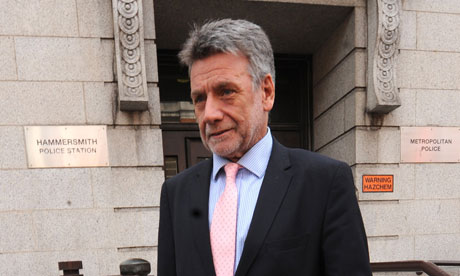
Former News of the World deputy editor Neil Wallis leaving Hammersmith police station in July. Photograph: Murray Sanders/Mail On Sunday

The relationship between the police and the News of the World has come under fire again amid revelations that Neil Wallis, the former deputy editor of the News of the World, was paid by the paper's publisher for "crime exclusives" while working for the Metropolitan police.

Wallis was secretly paid more than £25,000 by News International after he left the paper and got a contract to work two days a month as a PR consultant with the Met. One story earned him a single payment of £10,000.

The Daily Telegraph claims that internal records obtained by Scotland Yard show that he was paid for providing News International with details of a suspected assassination attempt on the Pope during his visit to the UK last year.

A spokesman for Scotland Yard said the contract it had with Wallis's PR firm, Chamy Media, "had a confidentiality clause, a data protection act clause and a conflict of interest clause within it".

He added that Wallis did not have access to the Met's IT systems.

The revelations that Wallis received money from News International while working for Scotland Yard will raise questions about conflicts of interest.

Last month, it emerged that Andy Coulson, the former editor of the News of the World, continued to receive payments from News International as part of a severance deal after he was employed by the Tory party as its director of communications.

Wallis's solicitor has made a complaint alleging that the police had leaked the information regarding the payments.


Friday, 23 September 2011

Palestinian leader Mahmoud Abbas makes UN statehood bid


Palestinian leader Mahmoud Abbas has submitted his bid to the UN for recognition of a Palestinian state. To rapturous applause in the General Assembly, he urged the Security Council to back a state with pre-1967 borders. He said the Palestinians had entered negotiations with Israel with sincere intentions, but blamed the building of Jewish settlements for their failure. Israeli PM Benjamin Netanyahu said he was reaching out to Palestinians and blamed them for refusing to negotiate. "I continue to hope that President Abbas will be my partner in peace," he said in his speech in New York. "Let's meet here today in the United Nations. Who's there to stop us?" Mr Netanyahu added that the core of the conflict was not settlements but the refusal of the Palestinians to recognise Israel as a Jewish state. Hours after receiving it, UN Secretary-General Ban Ki-moon transmitted the Palestinian request to the Security Council. Israel and the US say a Palestinian state can only be achieved through talks with Israel - not through UN resolutions. 'Come to peace' President Barack Obama told Mr Abbas on Thursday that the US would use its UN Security Council veto to block the move. Continue reading the main story Analysis Jeremy Bowen BBC Middle East editor, New York Some delegations here at the UN in New York gave Palestinian Authority leader Mahmoud Abbas a standing ovation - they were clapping and even whistling in support. That is significant because if it comes to a vote in the Security Council - and if the Americans veto it - Palestinians have a Plan B. That Plan B is to go to the General Assembly - where there are no vetoes - and get enhanced status, not full membership but something better than they have now. The Palestinians say they want to negotiate but not in the way they have negotiated before - there has to be clear parameters and a timetable. The Palestinian point is that since 18 years of negotiation has not worked, let's try something new. "I call upon the distinguished members of the Security Council to vote in favour of our full membership," he told the General Assembly, in what was for him an unusually impassioned speech. He added that he hoped for swift backing. Many delegates gave him a standing ovation. "I also appeal to the states that have not yet recognised the State of Palestine to do so." "The time has come for my courageous and proud people, after decades of displacement and colonial occupation and ceaseless suffering, to live like other peoples of the earth, free in a sovereign and independent homeland," he said. He urged Israel to "come to peace". And he said the building of Jewish settlements was "the primary cause for the failure of the peace process". A spokesman for the Islamist movement Hamas, which controls the Gaza Strip, criticised the speech. Salah Bardawil said Mr Abbas had deviated from the aspirations of the Palestinian people by accepting the 1967 borders, which he said left 80% of Palestinian land inside Israel. 'Future and destiny' Meanwhile in the West Bank, crowds roared their approval as Mr Abbas demanded UN acceptance of a Palestinian state within pre-1967 borders. Continue reading the main story Middle East viewpoints Analyst Yezid Sayigh argues that US and Israeli policies have forced the Palestinians to resort to requesting full UN membership. Israeli commentator Yossi Klein Halevi argues that the Palestinians need to convince the Israelis that any state would not be a threat. "With our souls, with our blood, we will defend Palestine," they said. Mr Abbas had called for peaceful marches in support of his initiative, but some clashes were reported: One Palestinian was shot dead by Israeli troops during clashes in the village of Qusra, south of Nablus, Palestinian sources say At the Qalandiya checkpoint, Israeli troops fired tear gas on stone-throwing Palestinian youths In the village of Nabi Saleh, protesters burned Israeli flags and pictures of President Obama The process began with Mr Abbas presenting a written request for a State of Palestine to be admitted as a full UN member state to the UN secretary general. The BBC's Kim Ghattas at the UN says that until the last minute Western diplomats tried and failed to stop the Palestinians making the request. Even now, efforts are under way to restart direct talks between the Israelis and Palestinians in an attempt to defuse tensions, our correspondent says. The Security Council will examine it and vote on the request. In order to pass, it would need the backing of nine out of 15 council members, with no vetoes from the permanent members. A Security Council vote could take weeks to come about and the US may not even need to exercise its veto - Washington and Israel have been lobbying council members to either vote against the Palestinian plan or abstain. Continue reading the main story Palestinian UN membership bid Palestinians currently have permanent observer entity status at the UN They are represented by the Palestine Liberation Organisation (PLO) Officials now want an upgrade so a state of Palestine has full member status at the UN They seek recognition on 1967 borders - in the West Bank, including East Jerusalem, and Gaza Enhanced observer member status could be an interim option Q&A: Palestinians' UN statehood plans Why Obama has turned towards Israel French President Nicolas Sarkozy has urged a compromise, suggesting the General Assembly give the Palestinians enhanced status as a non-member state to allow a clear timeline for talks - a month to start negotiations, six months to deal with borders and security and a year to finalise a "definitive agreement". A vote on enhanced status - enjoyed by others such as the Vatican - would not require a Security Council recommendation but a simple majority in the General Assembly, where no veto is possible. Currently the Palestinians have observer status at the UN. The "Quartet" of US, European, Russian and UN mediators has been working on reaching a framework agreement to restart talks, based on Mr Obama's vision of borders fashioned from Israel's pre-1967 boundary, with agreed land swaps.

Thursday, 22 September 2011

European banks head towards another meltdown


Shares in some of Europe's largest banks fell by 10pc as the cost of insuring European lenders' senior bonds rose to record levels, according to credit default swap prices. The Markit iTraxx Financial Index of contracts on the senior debt of 25 banks and insurers climbed to an all-time high 315.5 basis points. The last banking crisis was regarded by most eurozone members as an Anglo-Saxon phenomenon caused by lax lending controls that resulted in major UK and US institutions either collapsing or having to take costly state-funded bail-outs. To offset the threat of another crisis spreading across the eurozone, European regulators ordered their banks to increase their liquidity buffers. Government bonds were generally viewed as the most liquid and least risky assets to hold. However, this policy has come back to haunt them, leaving many lenders across the region seriously exposed to the eurozone sovereign debt crisis. French banking giants BNP Paribas and Société Générale are among the hardest hit. Recent estimates suggest BNP has eurozone sovereign debt exposure of about €75bn (£65bn), amounting to roughly 6pc of total assets, including €14bn of Greek debt and €21bn of Italian government bonds. The other two major French banks, SocGen and Credit Agricole, each have exposures of a similar size. Between them, France's banks have about €56bn of Greek sovereign bonds alone, and have so far taken 20pc writedowns on this.

signs of an institutional run on French banks


Christine Lagarde, the managing director of the International Monetary Fund, urged Europe's leaders to bail out their fragile banks, as the boss of the eurozone's biggest bank, BNP Paribas, rejected fears that the financial sector was "in peril". Addressing journalists in Washington at the opening of the IMF's annual meeting, Lagarde said that Europe must tackle "this twin problem of sovereign debt and the need to strengthen capital buffers". She said: "It is critical that to fuel growth, banks be in a position to finance the economy, to finance enterprises, to finance households, to finance local governments. To do that they need to have the balance sheet that will actually support credit to the economy." Despite the recent stress tests carried out by the European Banking Authority, which suggested that most of the banks were well-placed to cope with the sovereign debt crisis, the IMF estimates that banks have taken a €300bn (£260bn) hit in the past year as a result of the growing risk of default by Greece and other vulnerable eurozone countries. Lagarde's call came as Baudouin Prot, BNP's chief executive, emphatically denied reports that it was in talks with Middle Eastern investors about securing a capital injection. "I formally deny this," he said. "We have no particular contact because we don't need a capital increase." But French bank shares – which have lost 50% of their value in three months – continued to fall as markets endured one of their worst trading days since 2009. BNP was off more than 5% and close rival Société Générale fell almost 10%. In the UK, bailed-out Lloyds Banking Group was down more than 10%, bearing the brunt of anxiety about a slowdown in economic growth. The FTSE 100 closed down 4.7% with large falls from mining companies, which make up a large part of the index and whose fortunes are closely tied to global economic prospects. Out of the 100 stocks, only technology company Autonomy – supported by a bid from Hewlett-Packard – fell by less than 1%. A survey from the crucial manufacturing sector, which chancellor George Osborne had hoped would lead an economic recovery, exacerbated the nervous mood by suggesting industry had been hit hard by the collapse of confidence around the world. The CBI's monthly industrial trades survey showed declining orders, both at home and abroad, and a rising backlog of finished goods, in the latest evidence that the recovery has stalled. Minutes from the latest meeting of the Bank of England's monetary policy committee revealed on Wednesday policymakers were preparing a new round of quantitative easing to respond to the worsening outlook. The gloom was echoed in the eurozone, where the early, "flash estimates" from the closely watched purchasing managers surveys signalled a sharp downturn in both manufacturing and services growth, adding to fears that Europe could be heading for a new recession. The Greek government announced new austerity measures this week to persuade investors that it is committed to tackling its debts. But investors are still fretting about the potentially devastating impact of a default on the region's banks. BNP insisted on Thursday that it could maintain a core tier one ratio – an important measure of financial strength – of 9% by January 2013 even if it sustained losses through the eurozone crisis. But Mohamed El-Erian, boss of the world's biggest bond investor Pimco, warned in a blog on the FT's website that there were "signs of an institutional run on French banks".

Europe leaves Bulgaria, Romania out in Schengen cold


Europe left Bulgaria and Romania out in the cold Thursday, when Finland and the Netherlands blocked their entry into the passport-free Schengen travel area. The Dutch and the Finns refused to let them in, at a meeting of EU interior ministers dogged by concerns about illegal migration, citing poor progress in the fight against corruption and organised crime. "Two member states today made it impossible for us to make a decision on Schengen enlargement," Polish Interior Minister Jerzy Miller, whose country holds the EU's rotating presidency, lamented after the talks. "This leads me to a rather sad conclusion regarding mutual trust among the member states," Miller added, saying Bulgaria and Romania were promised a place in Schengen when they joined the European Union in 2007. "Today the promise has been broken," he said, adding that Romania and Bulgaria had made "huge progress." But the Dutch and Finnish governments disagreed. "What we wanted to avoid was to take a decision today that we would later regret," said Dutch Immigration Minister Gerd Leers. "Imagine you have a door with eight of the best locks in the world. But before that door is standing someone who lets everybody in -- then you have a problem," he said. The ministers did not vote, sending a decision to an EU summit in October, but the Dutch minister said his government was unlikely to change its mind. Schengen's enlargement requires unanimous consent. Poland sought to convince EU peers to accept a two-step solution that would allow Romanian and Bulgarian air and sea borders to open by October 31, while a date on opening land borders would be put off to next year. All nations backed the compromise except for the two opponents, diplomats said. "We don't have complete confidence that these countries will be able to secure outer EU borders because of corruption, among other issues," said Finnish Interior Minister Paeivi Raesaenen. Bulgarian Interior Minister Tsvetan Tsvetanov told national radio that Finland and the Netherlands "presented abstract arguments" against the bids and were "isolated compared to other EU members." Schengen, an area stretching from Portugal to Poland, through which road, rail and even air travellers need only basic identity papers to move freely, has come under growing strain this year over fears about illegal migration. Greece's struggle to police its porous border with Turkey, fears that the Arab revolutions could unleash a wave of boatpeople, and rising populism in some nations have sparked calls for a shake-up of the whole system. Romania has accused the Dutch centre-right government of being held hostage to the far-right. The Dutch centre-right government rules with the backing of Geert Wilders' far-right Freedom Party (PVV). In Finland, the far-right True Finns made major gains in recent elections. After the Dutch indicated their likely stance in advance of Thursday's talks, Romanian border authorities this week blocked Dutch trucks carrying tulips from the Netherlands -- officially over a bacteria scare. Romanian daily Adevarul linked the move to the Schengen dispute, calling it the "war of the flowers." The trucks were finally allowed into Romania on Thursday.

French court fines women for wearing veils


France's fines on women for wearing the full-face covering niqab veil, imposed for the first time by a court on Thursday, are a "travesty of justice," Amnesty International says. Police have issued several on-the-spot fines since the ban came into force in April but the hearing saw the first two court-issued fines, and the Muslim women vowed to appeal their case all the way to the European Court of Human Rights. "This is a travesty of justice and a day of shame for France. These women are being punished for wearing what they want," Amnesty International's deputy director for Europe and Central Asia John Dalhuisen said in a statement. Advertisement: Story continues below "Instead of protecting women's rights, this ban violates their freedom of expression and religion." The court in the northern cheese-making town of Meaux ordered Hind Ahmas, 32, to pay a 120 ($A163) fine, while Najate Nait Ali, 36, was fined 80 euros. It did not order them to take a citizenship course, as the prosecutor had wanted. The women were arrested when they brought a birthday cake for local mayor and lawmaker Jean-Francois Cope, who is head of President Nicolas Sarkozy's right-wing UMP party that pushed through Europe's first anti-burqa law. France is not the only country to try to ban the Muslim full-face veil - Belgium and some Italian cities have similar laws, while other countries are planning to follow suit - so a European ruling could have broad effect. French officials estimate that only around 2,000 women, from a total Muslim population estimated at between four and six million, wear the full-face veils traditionally worn in parts of the Arab world and South Asia. Many Muslims and rights activists say the right-wing president is targeting one of France's most vulnerable groups to signal to anti-immigration voters that he shares their fear that Islam is a threat to French culture.

Muammar Gaddafi has fled Sabha


The National Transitional Council are investigating an unconfirmed report that Muammar Gaddafi has fled from Sabha, NTC spokesman reports.  NTC spokesman also states that Libyan government forces now control most of Sabha with small pockets of resistance from pro-Gaddafi snipers.

Wednesday, 21 September 2011

Spain Examines Long Hidden Swiss Account


Emilio Botín is a billionaire Spanish banker renowned for running a tight ship. He asks that his top credit officers at Santander — one of Europe’s largest banks — make a trek to his vacation home each summer to report on loan exposures. And he queries the head of his charitable foundation, euro for euro, on its smallest donations. Enlarge This Image Daniel Ochoa De Olza/Associated Press A Spanish court is investigating whether the family of Emilio Botín, the head of Banco Santander, paid too little taxes. Add to Portfolio HSBC Holdings PLC Barclays PLC Go to your Portfolio » Enlarge This Image Nacho Cubero/Reuters Emilio Botín is head of Banco Santander, which is based in Madrid. Readers’ Comments Share your thoughts. Post a Comment » Read All Comments (30) » Yet, there is one not-so-small matter that Mr. Botín (pronounced bo-TEEN) has failed to keep tabs on: a Swiss bank account secretly opened long ago by his father that grew to such a size that when Spanish authorities discovered its existence last year, Mr. Botín and other family members paid 200 million euros (about $273 million currently) in taxes to avoid tax evasion charges. At the request of tax fraud inspectors, a Spanish national court is investigating whether the payment is enough, given the amount that was stashed abroad; tax experts in Spain say that the account could reach two billion euros. The court has also said that officials need more time to sift through the blizzard of documents that the family submitted and will consider whether a criminal charge of document fraud should be brought. A lawyer for the Botíns, Jesús Remón, said the family was cooperating with the investigation and was “fully in compliance with its tax obligations following their voluntary filing” last year. He added that no family member had been charged with wrongdoing. Mr. Botín’s tax problems come as debate intensifies over whether struggling governments should demand more tax revenue from the rich. On Monday, President Obama called to end some tax breaks for the wealthiest taxpayers in the United States. Last Friday, the Spanish government reintroduced a wealth tax that it had abolished three years earlier, hoping to collect an estimated 1.08 billion euros from taxpayers with more than 700,000 euros in declared assets. Spain’s wealthiest have so far not publicly endorsed calls for higher taxes, and Mr. Botín on Friday told reporters that “it seems to me very bad to reintroduce” the wealth tax. More so than in other European countries, where bankers are largely anonymous figures, Mr. Botín holds sway in Spain. Although he avoids social events and his public utterances are few, his influence is seen as wide-ranging. And he has been able to retain control of Santander despite his family’s controlling just 2 percent of its shares. Neither the judiciary nor the family has provided details about how much money the Swiss bank account contained or how the amount grew over time. Nor would Mr. Remón, the lawyer, comment on whether Mr. Botín had been aware of the account. What is known is that Mr. Botín’s father, also called Emilio, left Spain with part of his wealth in late 1936, after the start of the Spanish Civil War, fearing, like many other Spaniards, what might come. The elder Mr. Botín spent a few months in London before moving to Basel, Switzerland, and eventually returning to Spain to resume leadership of the bank that he had run since 1933. But while he returned to Spain, the money he salted away in Switzerland did not. The senior Botín died in 1993. Last year, the French government passed on to Spain data that it had obtained from Hervé Falciani, a former employee in HSBC’s Swiss subsidiary, naming almost 600 Spanish holders of secret bank accounts. Among those was one belonging to the estate of Mr. Botín’s father. In his opening summary, the judge in charge of the case, Fernando Andreu, highlighted “the complexity of the hereditary structures” of trusts, foundations and other companies set up to oversee the account. The closest he came to explaining what was in the account was to say that it also included a 12 percent stake in Bankinter, a midsize bank in which Jaime Botín, Emilio’s brother, is a leading shareholder. That holding, at current stock market value, would be worth about $310 million.

Tuesday, 20 September 2011

Scotland Yard drops Official Secrets Act bid against Guardian


Scotland Yard had intended to take the Guardian newspaper to court on Friday in an attempt to force the newspaper into revealing how it obtained information that missing schoolgirl Milly Dowler’s mobile phone had been hacked. However, following discussions with the Crown Prosecution Service (CPS), the force has abandoned its application for production orders against the newspaper. The decision comes following heavy criticism of the force’s attempt to make the Guardian, and one of its journalists, hand over information which would have revealed the source of many of the newspaper’s phone hacking stories. Various MPs, including the shadow culture secretary Ivan Lewis, questioned the Yard’s attempt. While many national newspapers carried leading articles condemning the Metropolitan Police’s apparent attack on press freedom. And today the former Attorney General Lord Goldsmith told the Daily Telegraph that the force’s decision to invoke the Official Secrets Act was “unusual” and could threaten press freedom.

Gadhafi spotted as rebels capture parts of south Libya town


Fugitive Libyan leader Muammar Gadhafi was spotted in the southern city of Sabha a few days ago, the regional daily Asharq al-Awsat reported on Tuesday, citing an eyewitness. The witness claimed that Gadhafi was living in the city, located around 750 kilometers south of the capital Tripoli. Anti-Gadhafi fighters firing a cannon near Sirte, the hometown of deposed leader Muammar Gadhafi, September 17, 2011. Photo by: Reuters Gadhafi's whereabouts have been unknown since rebels took over Tripoli in August. However, he continues to send statements and voice messages through the Syria-based al-Rai channel. The report comes after the anti-Gadhafi rebels said they took over parts of Sabha city as well as its airport. "The airport of Sabha has been liberated by our fighters," a military spokesman, Colonel Ahmed Bani, said in Tripoli on Monday. "Also two villages near Sabha have been liberated." For around a week the rebels have been fighting pro-Gadhafi fighters, who have put up stiff resistance in his birthplace of Sirte and the desert town of Bani Walid, south-east of Tripoli. Almost a month after they overran Tripoli, the rebels are at pains to take control of the two strongholds before their leaders can declare all of the North African country "liberated."

Monday, 19 September 2011

Iran arrests six 'BBC Persian film-makers'


The Iranian authorities have arrested a group of film-makers and accused them of working for the BBC Persian service, which is banned in the country. State TV reports that the group of six were paid to make secret reports for the Farsi-language service. The BBC says no-one works for the Persian service inside the country - either formally or informally. The arrests came a day after the service showed a documentary on Iran's Supreme Leader Ayatollah Khamenei. The BBC's James Reynolds says the channel's signal, which is sometimes accessible inside Iran, was disrupted during the broadcast. Increasing pressure The corporation said the documentary on the ayatollah was an in-house production and none of the six film-makers had been involved with it. "The individuals in question are independent documentary film-makers whose films have been screened in festivals and other venues internationally," said the statement. "As is common practice for the channel's documentary showcase programme, BBC Persian television bought the rights to broadcast these films." The BBC's language service chief Liliane Landor said BBC Persian had done nothing unusual in buying the rights to independent films. She said the arrests were part of the "ongoing efforts by the Iranian government to put pressure on the BBC" to influence its impartial and balanced coverage of its Farsi-language TV broadcasts. The corporation said BBC Persian has been subject to increasing and aggressive jamming from within Iran. The channel has suffered deliberate attempts to interfere with its signal intermittently since its launch in 2009.

UK Home Office considering gender-neutral passports


The Home Office has said it is considering the possibility of not displaying gender on passports. The proposals follow changes to Australian passport rules, which mean that intersex people who identify as neither gender can be listed as ‘X’, rather than having to choose between male or female. A Home Office spokesman said: “We are exploring with international partners and relevant stakeholders the security implications of gender not being displayed on the passport.” Currently, transgender people can obtain passports in their new gender. But intersex people – those born with chromosomal or genital ambiguity – must pick whether they are male or female. Supporters of gender-neutral passports say there is little need for passports to list gender and argue that other forms of ID do not state the information. Intersex rights campaigner Jennie Kermode told PinkNews.co.uk last week that the change would be easy to implement. She said: “The passport offices in the UK will not issue passports with the ‘X’ option now, although they could do so without, as I understand it, any necessary change in UK laws.” Another campaigner, Jane Fae, said: “The issue of documenting gender goes much wider than the ‘feelings of trans and intersect people’. In fact many in the trans community would oppose the removal of gender as its inclusion on passports is vital to ensure safety when travelling abroad. “Many non-trans individuals would be happier not declaring gender for all sorts of reasons. It should be optional for all.”

Sunday, 18 September 2011

Tony Blair 'visited Libya to lobby for JP Morgan'


A senior executive with the Libyan Investment Authority, the $70 billion fund used to invest the country's oil money abroad, said Mr Blair was one of three prominent western businessmen who regularly dealt with Saif al-Islam Gaddafi, son of the former leader. Saif al-Islam and his close aides oversaw the activities of the fund, and often directed its officials on where they should make its investments, he said. The executive, speaking on condition of anonymity, said officials were told the "ideas" they were ordered to pursue came from Mr Blair as well as one other British businessman and a former American diplomat. "Tony Blair's visits were purely lobby visits for banking deals with JP Morgan," he said. He said that unlike some other deals - notably some investments run by the US bank Goldman Sachs - JP Morgan's had never turned "bad".

Thursday, 15 September 2011

UBS Has $2 Billion Trading Loss; Police Arrest Man in London


UBS AG, Switzerland’s biggest bank, may be unprofitable in the third quarter after a $2 billion loss from unauthorized trading at its investment bank. London police arrested a 31-year-old man on suspicion of fraud. UBS management aims to “get to the bottom of the matter as quickly as possible, and will spare no effort to establish exactly what has happened,” the bank’s group executive board, led by Chief Executive Officer Oswald Gruebel, said in a memo to employees today. “While the news is distressing, it will not change the fundamental strength of our firm.” The bank tumbled as much as 9.6 percent in Swiss trading following the announcement, which deals a blow to Gruebel’s attempts to revive the investment bank after the division recorded 57.1 billion Swiss francs ($65 billion) in cumulative pretax losses in three years through 2009. The trading loss may revive calls for Gruebel to shrink or shut the unit. “How many times do we have to see huge UBS losses?” said Simon Maughan, head of sales and distribution at MF Global Ltd. in London. “It looks unreformed, unwieldy and ultimately unsustainable. This could be a critical tipping point for UBS’s strategy.” UBS fell 79 centimes, or 7.2 percent, to 10.14 francs by 11:43 a.m. in Zurich, bringing the drop this year to 34 percent. UBS said in a statement the matter is still under investigation, and that the “current estimate of the loss on the trades is in the range of $2 billion.” No client positions were affected, UBS said, declining to comment further. Arrest in London An unidentified 31-year-old man was arrested in central London at 3:30 a.m. on “suspicion of fraud by abuse of position,” the police said in a statement. The man remains in custody and an investigation has been started, the statement said. Switzerland’s Neue Zuercher Zeitung newspaper, citing the bank, reported that the trading loss took place in the equities unit in London, and was discovered yesterday afternoon. UBS spokeswoman Tatiana Togni declined to confirm or deny the report. UBS had to raise more than $46 billion in capital from investors, including the Swiss state, to make up for the record losses during the credit crisis. The investment-banking unit had pretax earnings of 1.21 billion francs in the first half of 2011, while UBS as a whole had net income of 2.82 billion francs in the period. The bank’s tier 1 capital at the end of the second quarter was 37.39 billion francs, giving it a tier 1 capital ratio of 18.1 percent, compared with 14 percent at Deutsche Bank AG, Germany’s biggest bank. Risk Management While the loss is “manageable” for UBS, it’s “obviously not helpful for sentiment and confidence in the bank’s risk management following the near-death experience of 2008-2009,” said Andrew Lim, a London-based analyst at Espirito Santo Investment Bank, in a note. Lim had estimated third-quarter net income of 1.1 billion francs for UBS. UBS last month said it will eliminate about 3,500 jobs, with about 45 percent of the reductions coming from the investment bank, as stricter capital requirements and market turmoil hurt the earnings outlook. The bank in July scrapped the target of doubling pretax profit from last year’s level to 15 billion francs by 2014. Gruebel, 67, and Carsten Kengeter, 44, who runs the investment bank, have been trying to revive earnings at the division for two years. They hired more than 1,700 people across the investment bank and brought in new business heads to replace those that left or were fired. They’ve also increased risk- taking to improve earnings opportunities. Kerviel, Leeson The investment bank last had a pretax loss in the third quarter of 2010 when what Gruebel called “very low levels of client activity” and a charge related to the bank’s own debt hurt revenue at the division. Gruebel, who formerly ran Credit Suisse Group AG, was brought out of retirement by UBS in February 2009 to take over from Marcel Rohner after the company posted the biggest annual loss in Swiss corporate history. A former bond trader, Gruebel doubled profit at Credit Suisse between 2004 and 2006. UBS isn’t alone in suffering from unauthorized trading. Societe Generale SA of Paris said in January 2008 that the bank lost 4.9 billion euros ($6.7 billion) after trader Jerome Kerviel took unauthorized positions on European stock index futures. Credit Suisse, Switzerland’s second-biggest bank, had a loss in the first quarter of 2008 in part because of writedowns on debt securities that were intentionally mispriced by a group of traders. Nick Leeson piled up $1.4 billion of losses that brought down Barings Plc in 1995. --With assistance from Paul Verschuur and Carolyn Bandel in Zurich and Gavin Finch in London. Editors: Frank Connelly, Stephen Taylor

Sunday, 11 September 2011

Microsoft online services hit by major failure


Millions of Microsoft users were left unable to access some online services overnight because of a major service failure. Hotmail, Office 365 and Skydrive were among the services affected. Microsoft was still analysing the cause of the problem on Friday morning, but said it appeared to be related to the internet's DNS address system. Such a major problem is likely to raise questions about the reliability of cloud computing versus local storage. Especially embarrassing is the temporary loss of Office 365, the company's alternative to Google's suite of online apps. Its service also went offline briefly in mid-August, less than two months after it launched. The latest disruption is believed to have lasted for around two-and-a-half hours, between 0300 GMT and 0530 GMT. In a blog, posted at 0649 GMT, Microsoft said: "We have completed propagating our DNS configuration changes around the world, and have restored service for most customers." The Domain Name System (DNS) is responsible for translating URL web addresses , such as bbc.co.uk into the internet's native system of IP addresses, e.g. 212.58.246.95.

Dramatic new phone hacking twist as police quiz top Guardian writer


A Guardian newspaper reporter has been questioned under caution by detectives investigating phone-hacking at the News of the World. Amelia Hill, who has broken major scoops about the scandal engulfing the Murdoch media empire, was quizzed by police probing alleged leaks from the investigation into News International. It is understood the 37-year-old reporter had a friendship with a detective who works on Operation Weeting. A Scotland Yard officer has been arrested and suspended on suspicion of leaking information to the Guardian. It marks an extraordinary twist in the five-year saga that has led to the arrest of 16 people, including Prime Minister David Cameron's spin doctor Andy Coulson, and the resignation of NI chief executive Rebekah Brooks. A Guardian News & Media spokesman said: "We can confirm Amelia Hill has been questioned in connection with an investigation into alleged leaks. On a broader point, journalists would no doubt be concerned if the police sought to criminalise conversations between off-record sources and reporters." In July Hill broke the Guardian's Milly Dowler story - described as a "tipping point" in the scandal - which revealed that private investigators working for the NoW hacked the voicemails of the murdered schoolgirl after she went missing. Within weeks, Mrs Brooks, Metropolitan Police Commissioner Sir Paul Stephenson and Les Hinton, media mogul Rupert Murdoch's right-hand man for more than 50 years, had all resigned. It is understood Hill received police tip-offs about impending arrests. The Evening Standard has been told the police officer suspended from Operation Weeting called the Guardian the night he was arrested asking to speak to Hill. The Guardian has broken key scoops relating to the scandal which began when former NoW royal editor Clive Goodman was jailed for hacking the voicemails of royal aides in 2006. In July 2009, the newspaper also revealed NI had paid £700,000 to football union boss Gordon Taylor in a bid to cover up alleged widespread phone-hacking at the now-defunct Sunday tabloid. Dan Roberts, the Guardian's national news editor, said on Twitter that the developments were a "bleak day for journalism when (a) reporter behind vital hacking revelations is criminalised for doing her job". Two separate internal inquiries into police relationships with the media were launched after it emerged that the NoW had allegedly paid more than £100,000 to corrupt royal protection officers in return for information. An inquiry by Her Majesty's Inspectorate of Constabulary is examining "alleged corruption and abuse of power" in police relationships with the media. Separately, former Parliamentary Commissioner for Standards Elizabeth Filkin is drawing up a framework for how police officers handle their relationships with reporters. Three years ago, a case against Sally Murrer, a reporter on the Milton Keynes Citizen, and a former Thames Valley police detective Mark Kearney was thrown out. Kearney had been accused of leaking information to her. Meanwhile, police arrested another 35-year-old man at his home at 5.55am on suspicion of conspiracy to intercept voicemail messages. He was taken to a north London police station for questioning. He is the 16th suspect to be held since the scandal broke. The dawn raid came as it emerged that Mr Coulson is refusing to give evidence to the House of Commons committee investigating the scandal. MPs on the culture, media and sport select committee have asked him to comment on claims that he knew that hacking was widespread on the NoW when he was editor

Traces of Gaddafi's gilded life

Tent commandments
  • Image Credit: AFP/EPA
  • Tent commandments: A picture combo shows revolutionaries taking souvenir pictures inside the tent where Libyan leader Gaddafi used to receive foreign dignitaries at the Bab Al Aziziya compound in Tripoli and Gaddafi meeting with Democratic Republic of Congo President Joseph Kabila in the same tent on July 17, 2008 (top and bottom). Top right: A man plays the piano in the ransacked seaside summer house of Hannibal Gaddafi, son of Muammar Gaddafi.

Tripoli: His name of choice was the Brother Leader, though his nearly 42 years of rule were rarely brotherly, and his leadership left one of the world’s most richly endowed countries in shambles.

Now, as the former subjects of Muammar Gaddafi comb through his family’s mansions, farms and seaside villas, the properties are revealing the details of lives lived far removed from the people, ones filled with the signs of their peccadilloes and rivalries.
At one farm, horses wandered by marble statues of lions, tigers and bears, and reindeers grazed by the wood deck of an empty pool. At the home of one son, Sa’adi, there were signs of a life mundane in its seeming frustration. A man who drifted through stints as an athlete, soldier and Hollywood movie producer, Sa’adi kept the English language self-help book Success Intelligence in his master bedroom. Given Gaddafi’s noted flamboyance, the residences of the House of Gaddafi were not quite as grand as people might minor have supposed.

Faux grandeur

They lacked the faux grandeur of Saddam Hussain’s marbled palaces. There are no columns that bear the Gaddafi’s initials, or fists cast in replica of his hands, or river-fed moats with voracious carp.

“For somebody who’s very rich, he was very cheap,” said resident Fuad Gritli, as he drove through a sprawling parcel near the airport known as the Farm, where Gaddafi lived.

In the sanctum of the Farm, there are rolling, irrigated fields. Camels wandered unattended. Still standing was a tent where he met foreign dignitaries, its canvas decorated in pictures of camels and palm trees. “We weren’t allowed to get anywhere near, not even the gate,” Gritli said. “Gaddafi was not living like a rich man, I admit that, said Malek Al Bakouri, a 27-year-old doctor from Tripoli, as he drove past a guest house where water cascaded from a broken pipe in a city suffering from a shortage of it. “But his sons, all the people in his tribe, and all the families around him lived good, and they lived good for 40 years.”

Gaddafi's sons’ behaviour would have made a reality show proud — Sa’adi was a professional soccer player, and Hannibal repeatedly had brushes with the law in Europe. But the sons’ villas on a sand bluff overlooking the Mediterranean had a distinctly 1970s feel. They were not lavish; the brown paint on the patio decks was peeling. But to the young fighters roaming through Hannibal’s quarters — furnished overwhelmingly in whites and blacks, and ringed with plastic grass — there was just enough luxury to inspire envy. “We’ve got to take this over!” said Bahaeddin Zintani, a 23-year-old revolutionary who took turns with his brother lying in bed and posing for pictures before a home gym fitted with a mirror. “This is the first time I’ve even seen anything like this.”

On a black granite bar, there were cases for Johnnie Walker Blue Label and Dom Perignon Rose, all empty.

Muatassim, the fourth-eldest Gaddafi son and the country’s national security adviser, surrounded himself with more luxury. He regularly arrived in a convoy of cars to a farmhouse in the Ain Zara neighbourhood of Tripoli protected by high walls and gates on four sides that were made to look like cinder-block walls. A driveway with a fountain featuring four-horse drawn carriages, and then, an ostentatious pool bungalow, with Roman columns at the entrance and topped by gold domes that looked like Hershey Kisses.

Amid the scattered shards of gilded furniture were relics of Sa’adi’s mundane if coddled life: directions for a battery-powered Barbie doll, mermaid floats that children must have played with in the swimming pool out back, a phrase book of English vocabulary for the finance business. Through his long reign, Gaddafi posed as an ever-struggling revolutionary, his ideas encapsulated in The Green Book. (In one memorable passage, he defended freedom of expression, even if a person chooses “to express his or her insanity.”) But the avowed simplicity never matched his lifestyle, prone as he was to epaulets, billowing robes and shirts emblazoned with green maps of Africa. His all-female contingent of guards was supposedly sworn to celibacy.

At Muammar Gaddafi’s residence in Bab Al Aziziya, his fortress-like preserve in the heart of Tripoli, there was a white binder with hundreds of pages of clippings about him. Graffiti on a wall nearby taunted the Brother Leader, now nicknamed for another distinguishing trait: unmanageable grooming. “Where’s the guy with the crazy hair?” it said.